Sydney Harbour, NSW
Cockatoo Island
A World Heritage island in the middle of the harbour — Wareamah, the name the Harbour Trust now uses alongside Cockatoo Island — reached by ferry, where you carry your camp in and pitch it on the grass with the bridge in front of you. One night, 1–2 October 2023.
- Where
- Cockatoo Island, Sydney Harbour, NSW
- Stayed
- 1–2 October 2023
- In
- Tent
- Getting there
- Ferry — everything carried in
The record
One night on the island
Camping on a World Heritage island in the middle of Sydney Harbour, with the bridge in view from the tent door. You arrive by ferry and carry everything in.
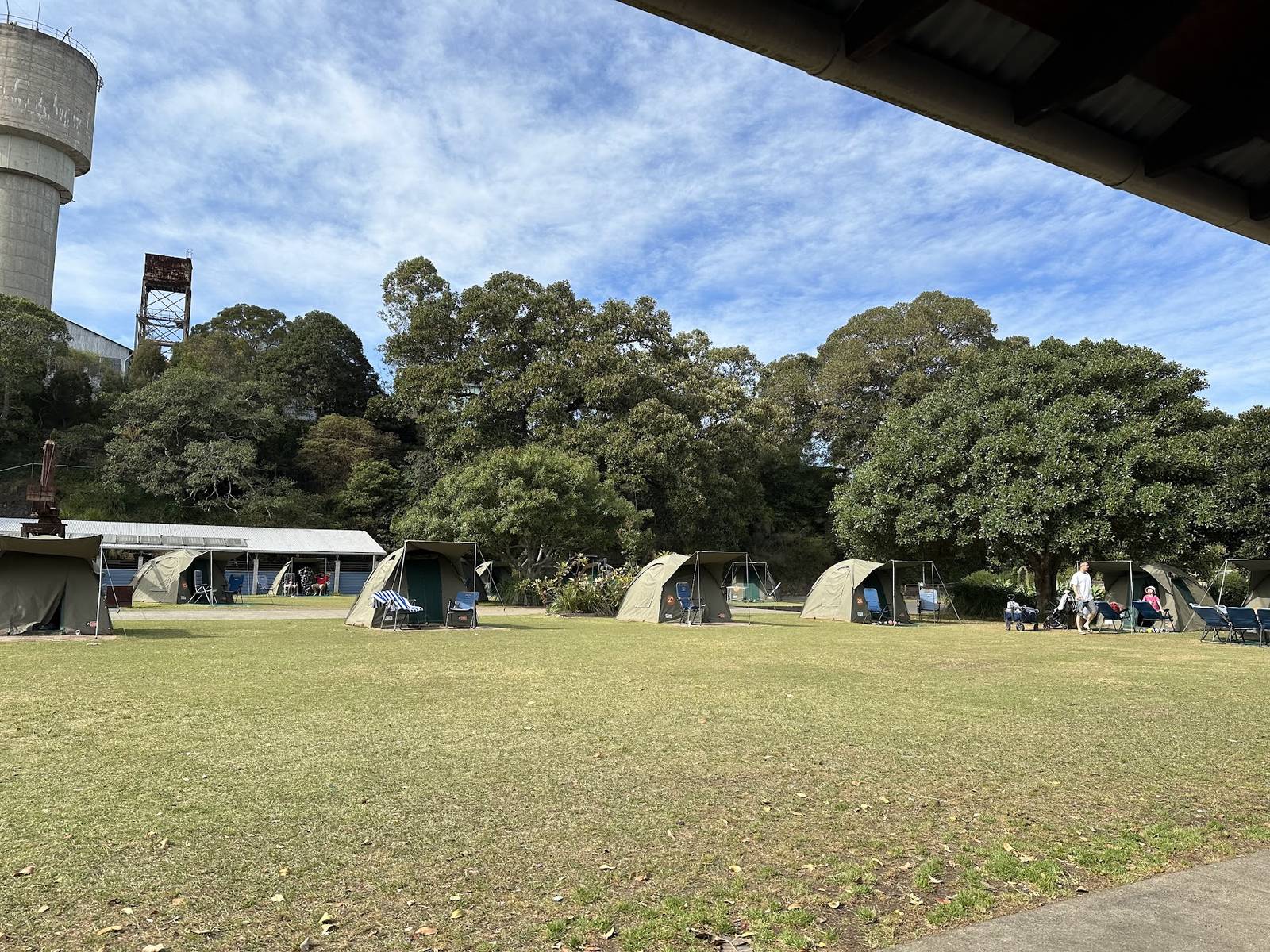
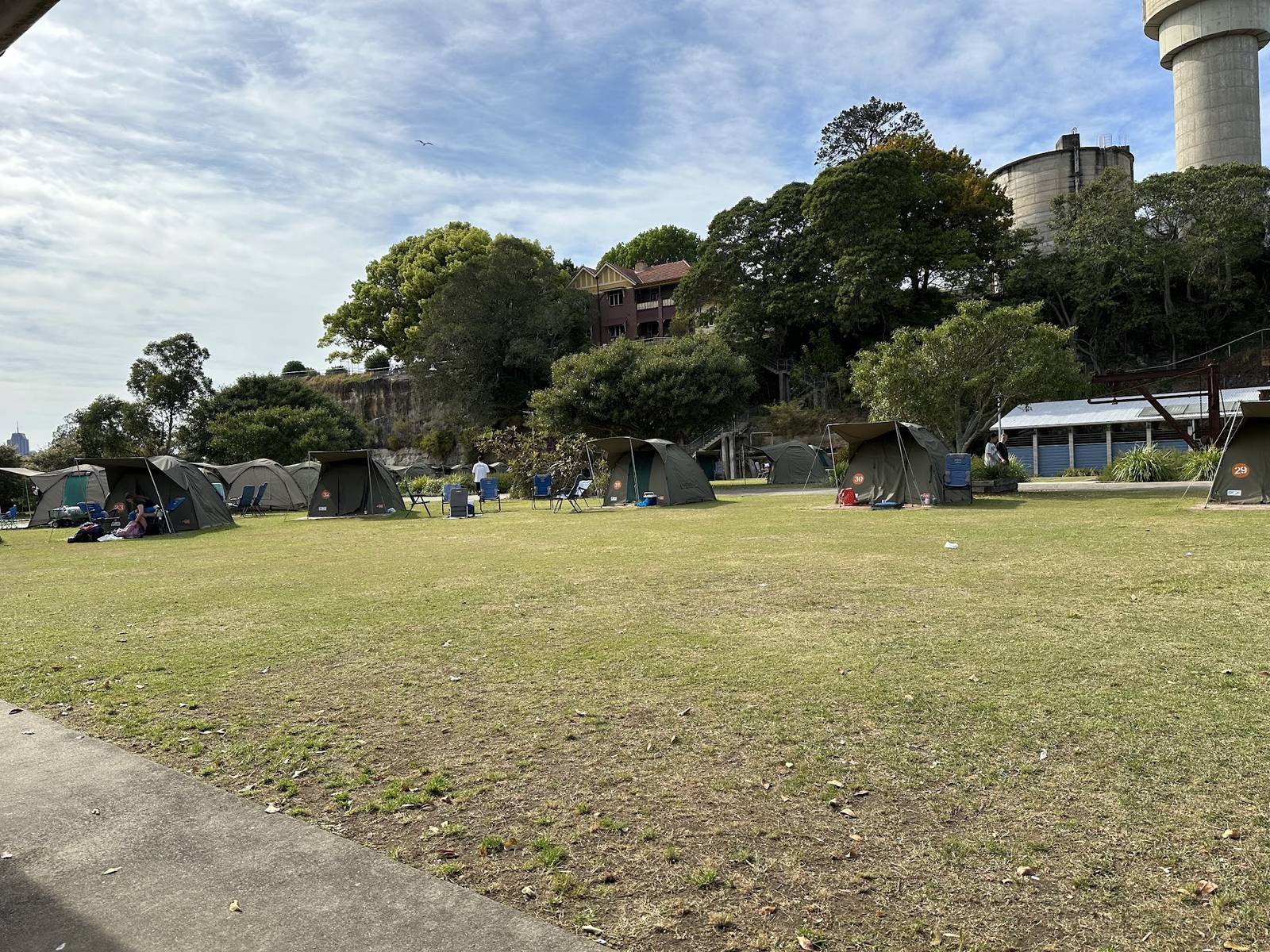
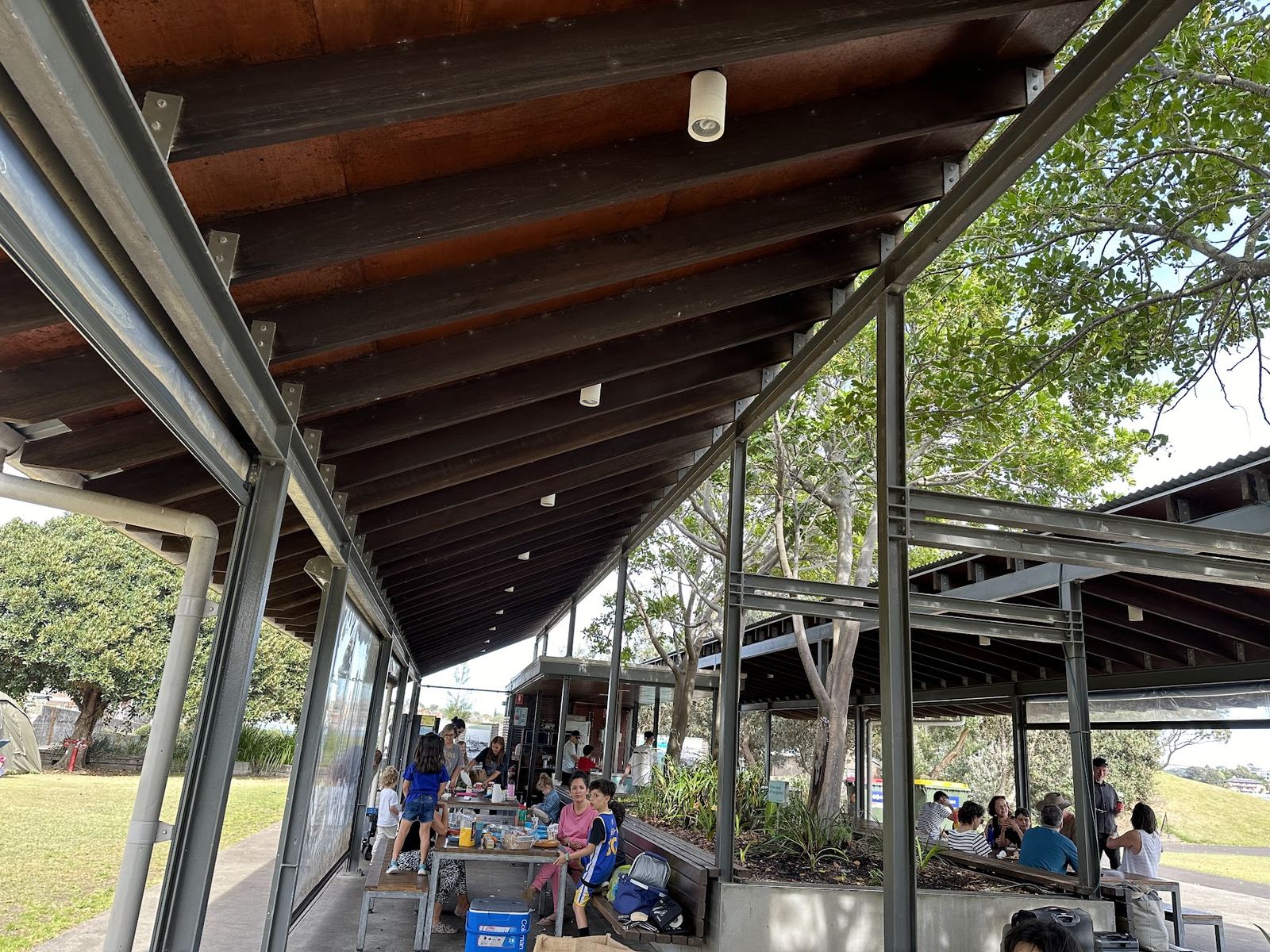
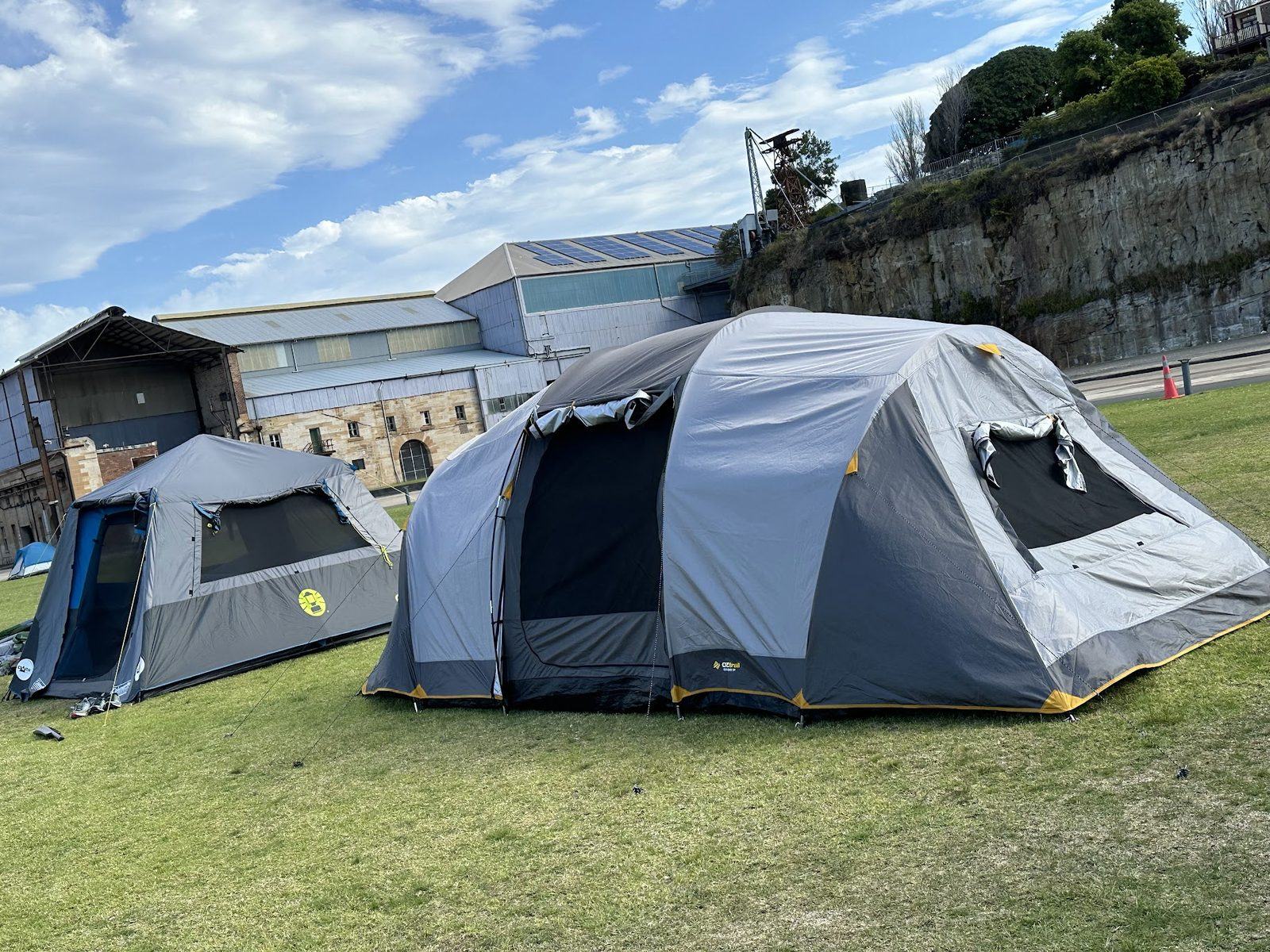
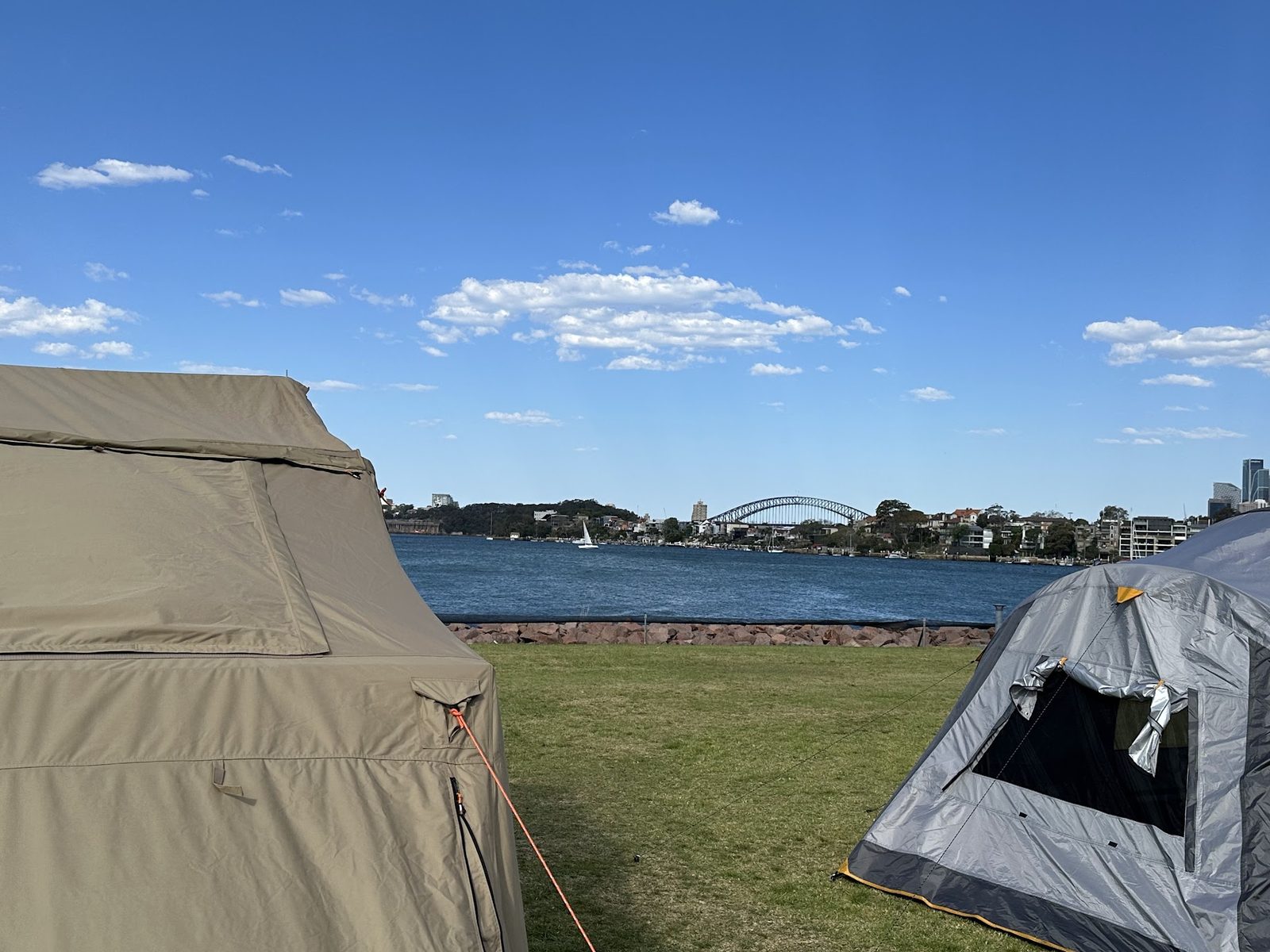
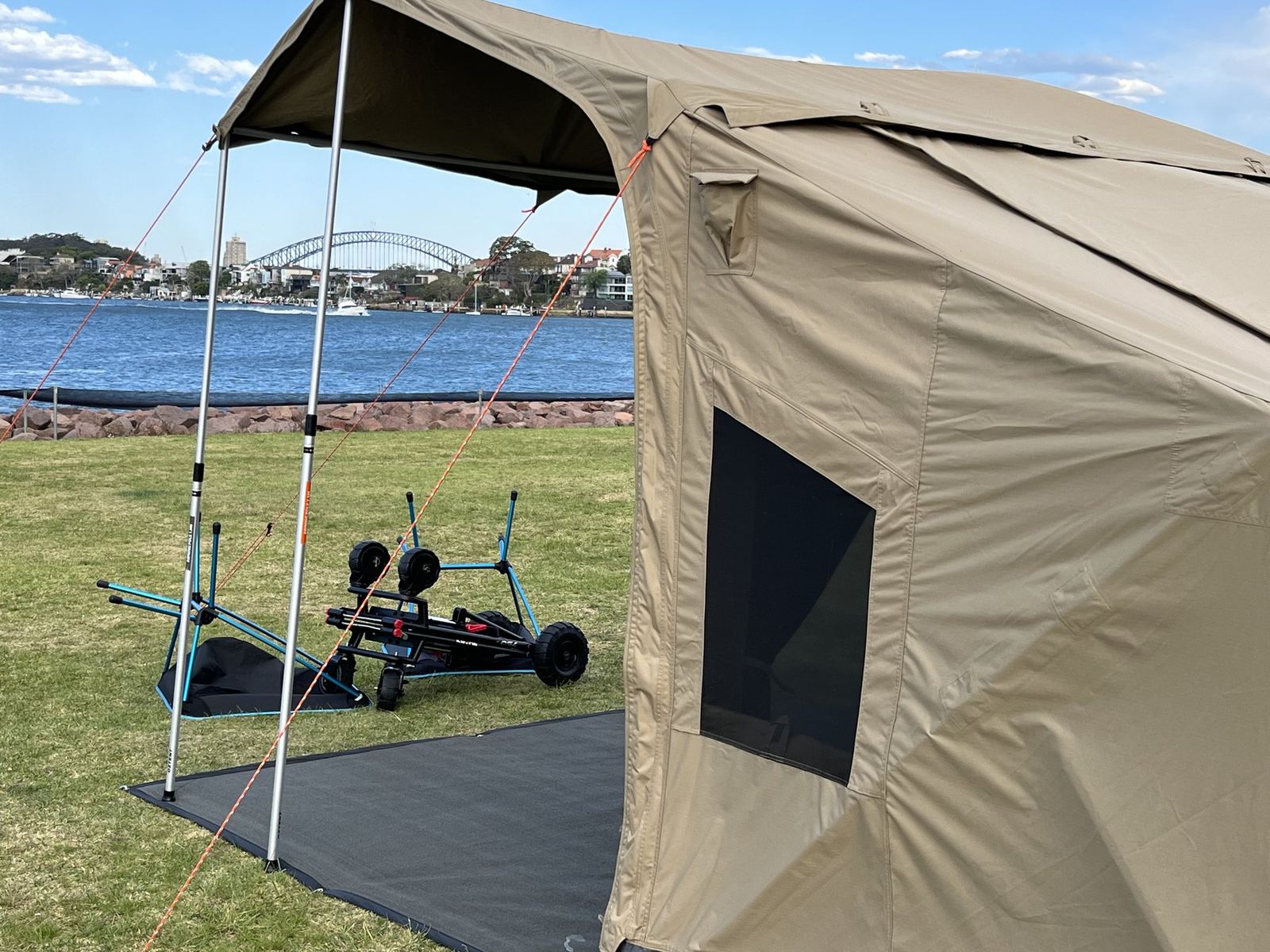
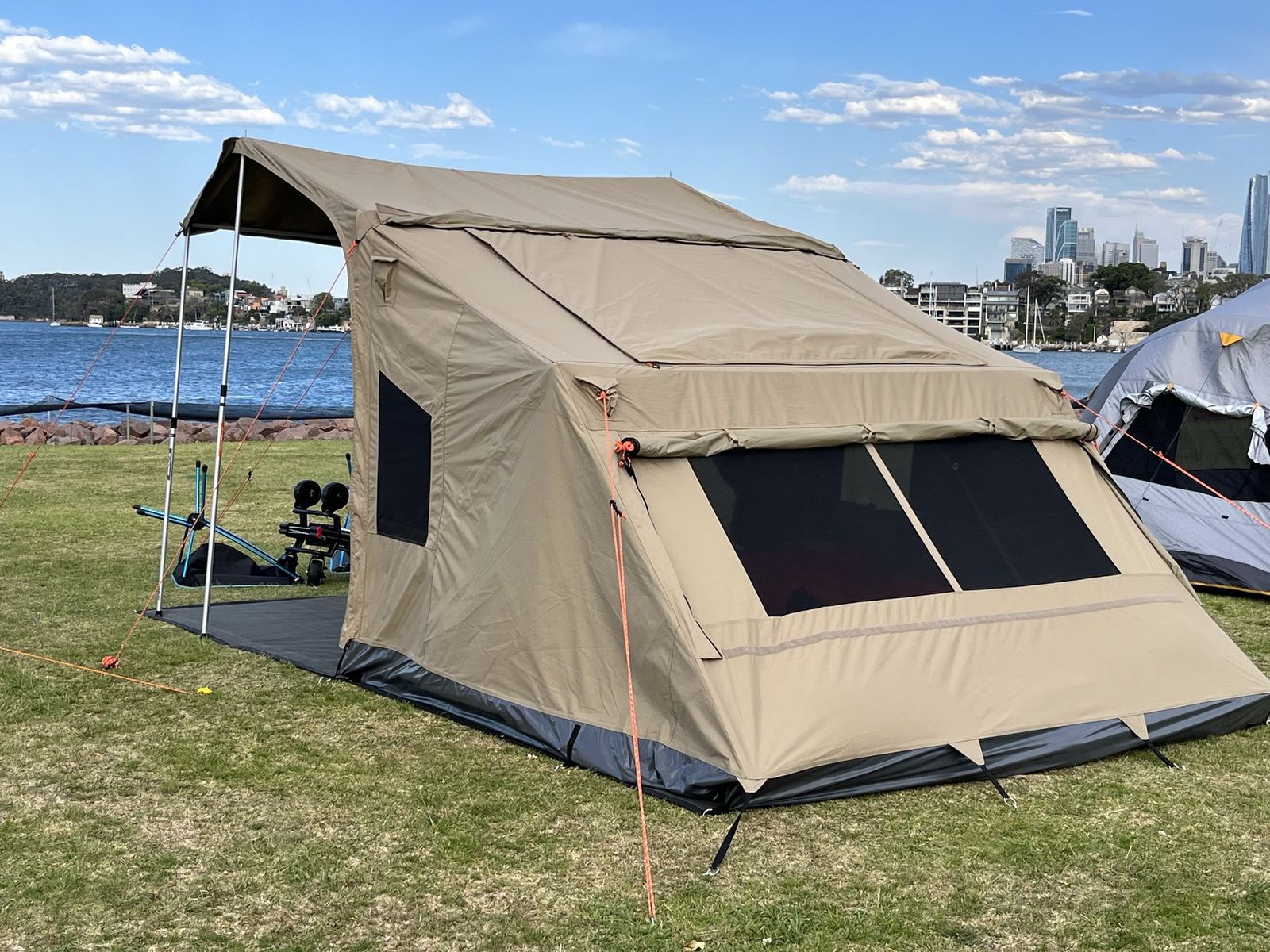
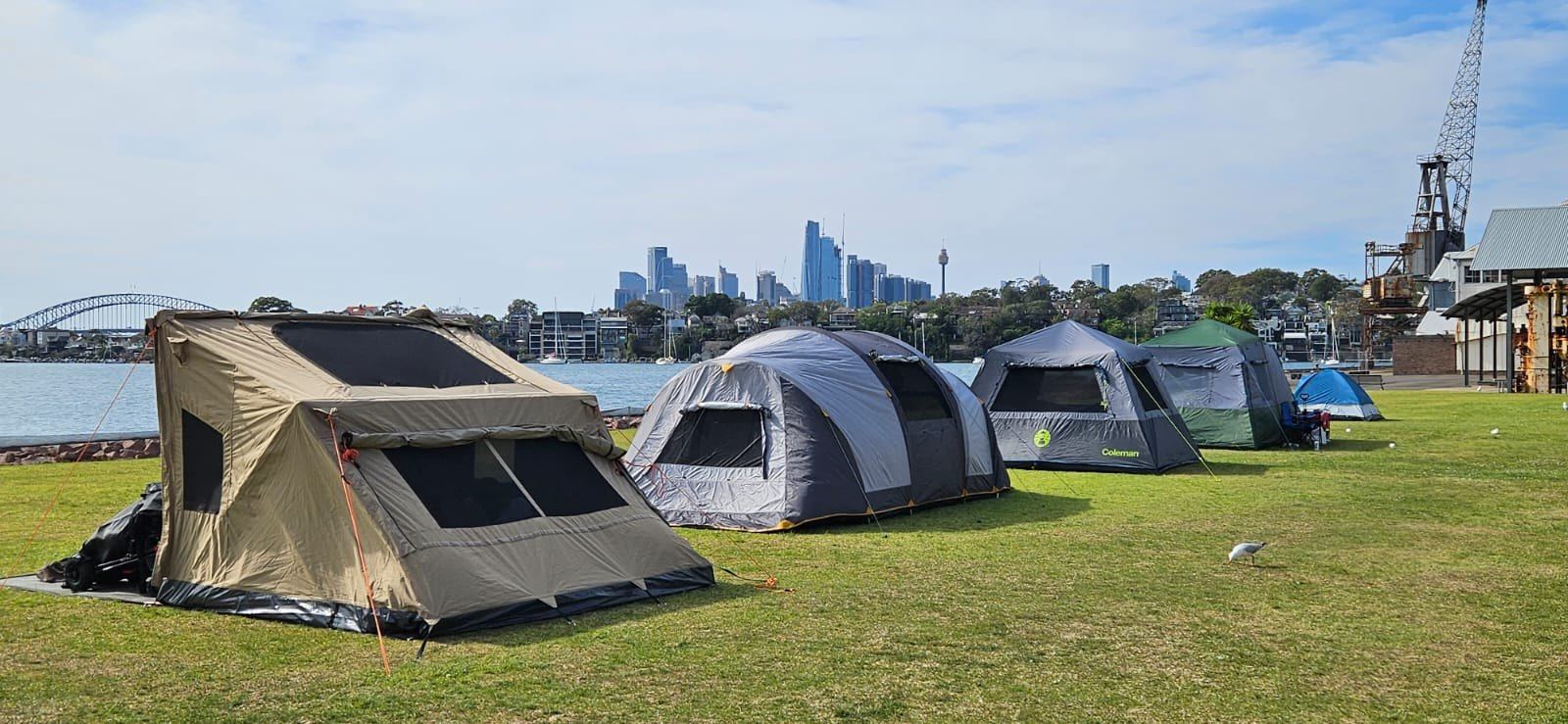
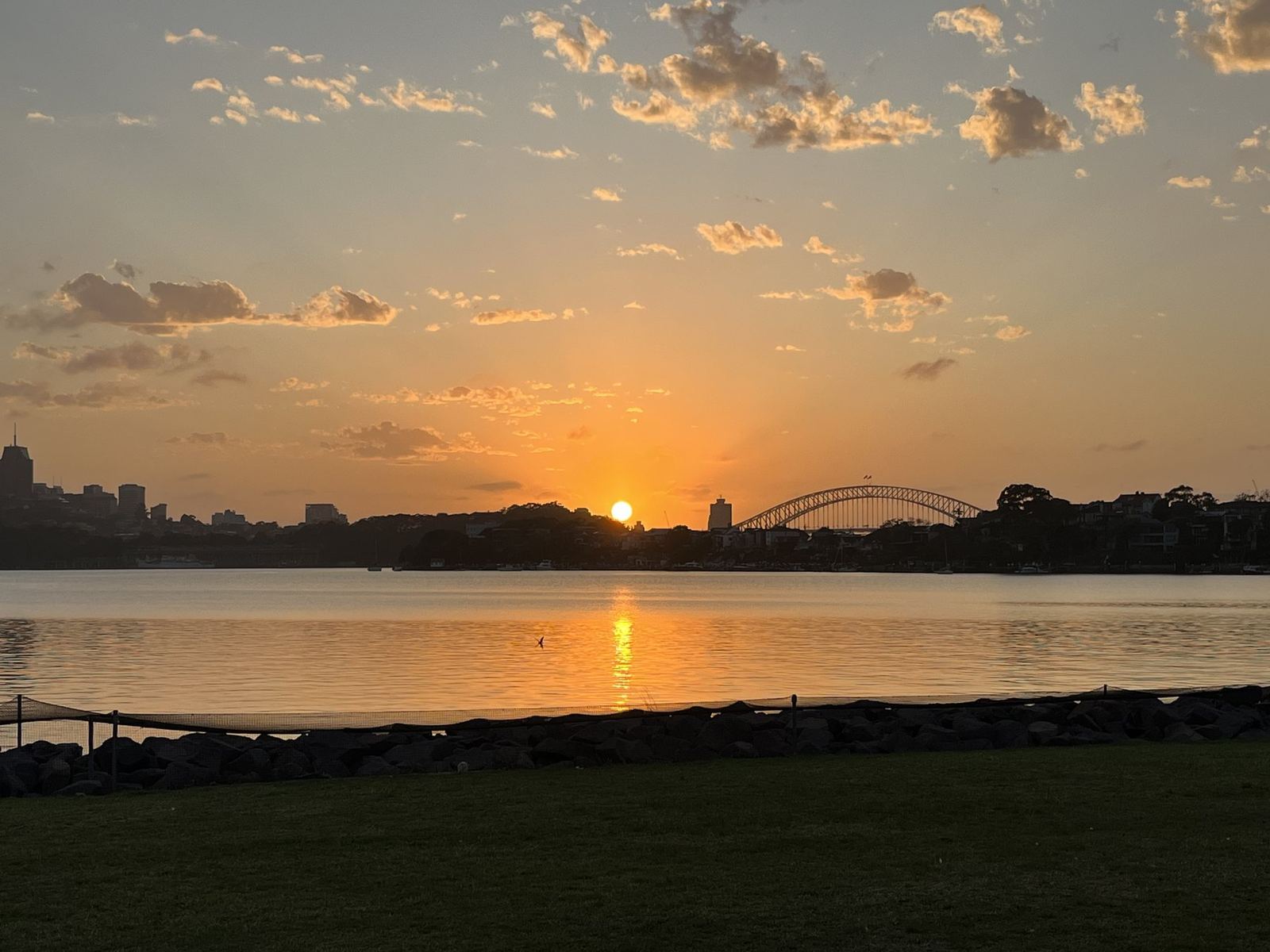
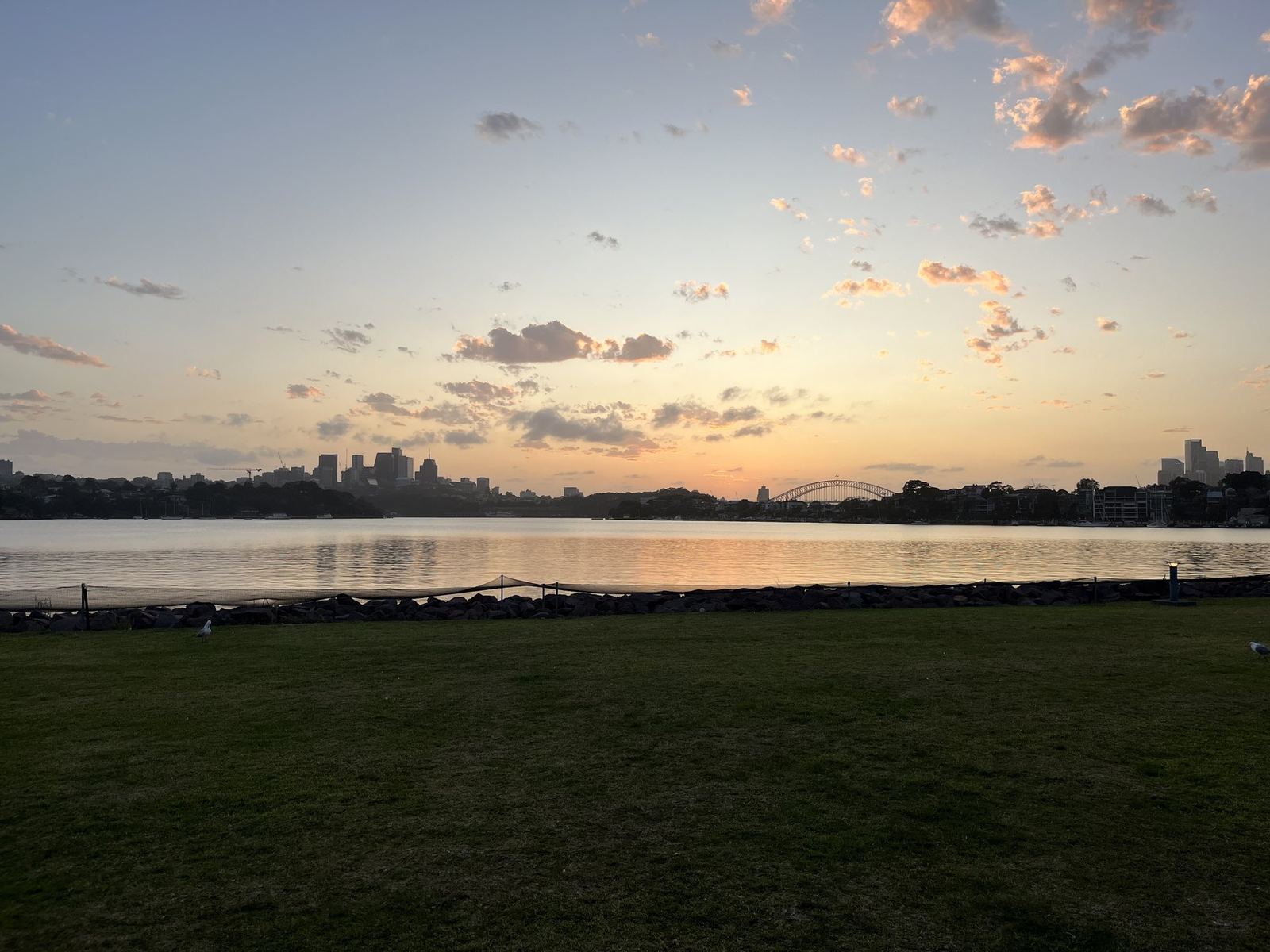
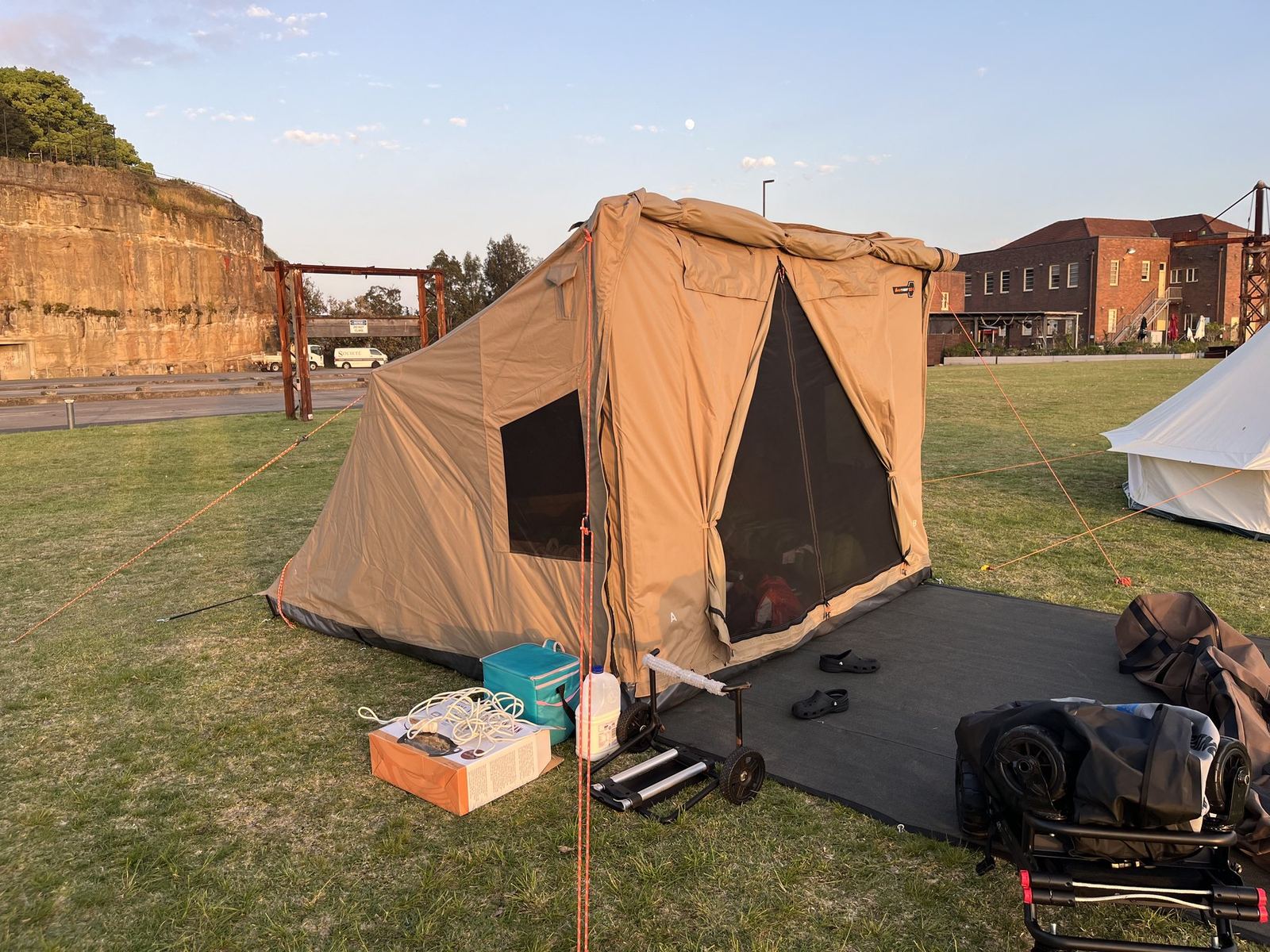
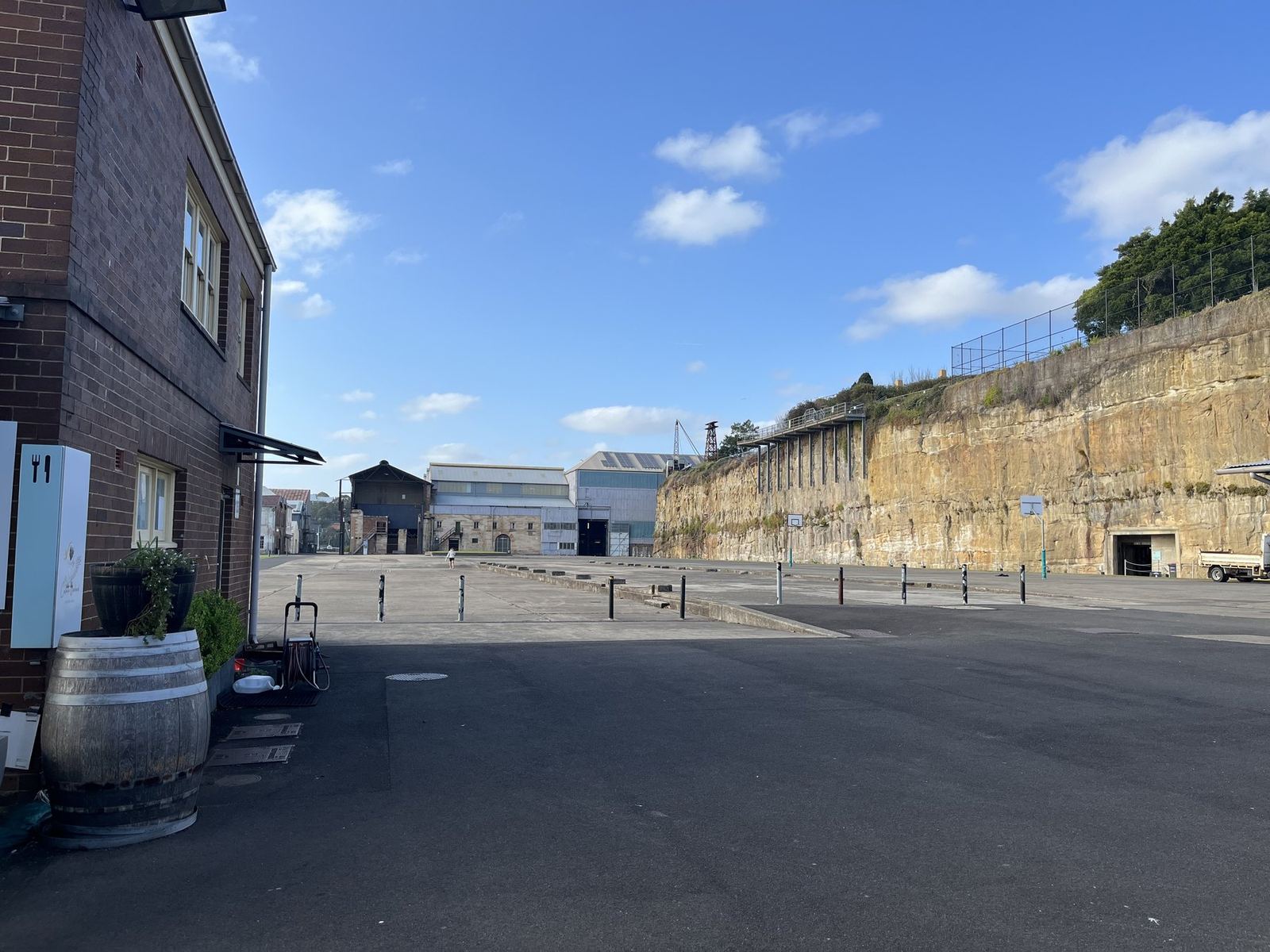
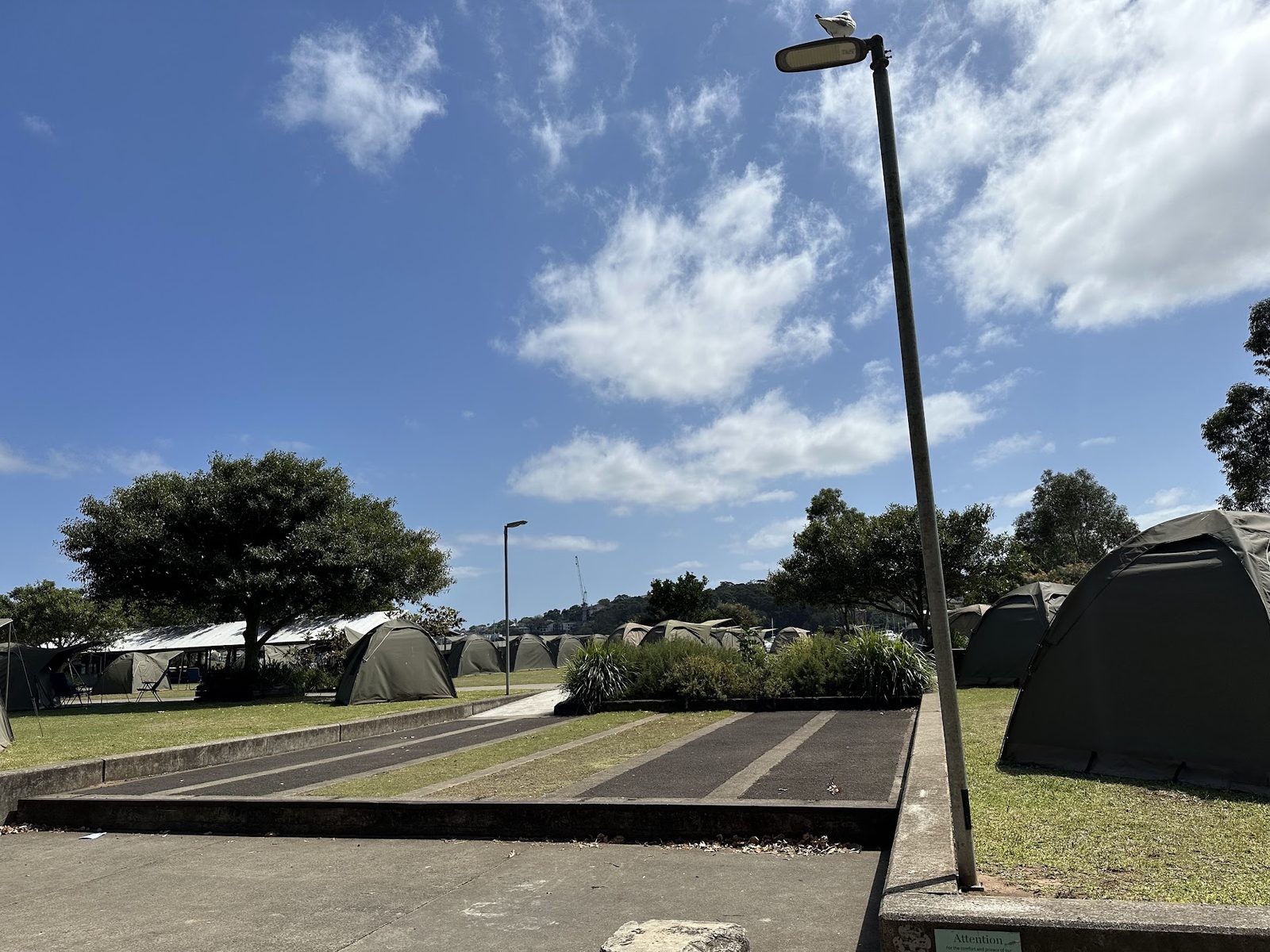
Our first night in a tent
This was the first proper tent trip for all four families. Everybody had a new tent — three of them bought only days before — and nobody quite knew what to bring, so everybody brought as much as the ferry would take. Three of the families live near Meadowbank, so we caught the ferry from Meadowbank wharf, one of the Parramatta River stops on the way to the island. We parked in the car park on Bowden Street, under the rail bridge, and wheeled everything down to the wharf on a trolley.
The booking was for two nights from 30 September; we arrived on 1 October and stayed one. The afternoon was hot — model weather data for the island puts it in the mid-thirties — and it was our first unpowered site. A few battery-powered things got us through, and nobody much minded: four tents in a row on the grass, the harbour in front, the city across the water, and day visitors coming and going until the last boats.
By evening it had turned windy, enough to lift the gazebo of a family camped next to us off the grass and carry it into the harbour while its owner chased it. Gazebos are now banned on the campground, and we can see why. The mothers and children caught a ferry into the city for dinner, promising to bring food back and keeping a firm eye on the last boat, and the four fathers stayed with the camp.
The southerly
Late in the evening, out of what had been a light breeze, a gust came across the open waterfront with no warning and kept coming for four or five minutes. Chairs, clothes and anything loose tried to leave; the four of us held on to whatever we could. A little rain came with it. When it stopped, three of the four tents were flat and broken. Ours, an Oztent RX5, was the only one still standing. Nothing was lost and nobody was hurt.
That was a southerly change. Model data for the island has the wind swinging from the north-west round to the south at about ten o’clock that night, and the temperature falling six degrees in an hour after the mid-thirties afternoon. It is a familiar Sydney pattern, and on a waterfront with nothing to break it the first few minutes are the worst of it.
By then the last ferry had gone, so there was no going home, and the campground was full — there was no spare tent space for three more families. We waited out the rain in one of the big old industrial buildings nearby and ate the dinner the others had brought back from the city. In the end the island’s staff found a conference room for the rest of the group to sleep in, and three of us went back to our own tent. The sunrise photographs above were taken from its doorway the next morning.
What we have learned here
Plan for the wind as well as the heat. This is an island surrounded by water, and the campground is open waterfront with no natural shelter. The afternoon can be hot and the night chilly — ours went from the mid-thirties to the mid-teens by morning — and in Sydney a hot spring or summer afternoon is often followed by a southerly change in the evening. Pack for both ends of the day, look for a change in the forecast, peg and guy the tent properly before dark, and put loose things away before you leave the camp.
Put a new tent up at home first. Every tent was new, and three were bought only days before. Two of those three families, ours included, had a practice run in our backyard beforehand, which got us past the instructions. But a sheltered backyard cannot tell you how a tent will take a southerly on an exposed harbour island.
The last ferry is a hard deadline both ways. Once it has gone you cannot leave the island — which matters just as much if your camp is flattened as if you are out at dinner.
Everything runs to set hours. In 2023 the campground kitchen and the toilets and showers each had set opening hours, with closures of an hour or two for cleaning, and there was one cafe open, with a queue from early morning. Check the times when you arrive, not when you need them.
Bring a trolley. Everything goes from the car to the ferry to the site by hand. Ours carried the lot from the car park to Meadowbank wharf, and on the island the campground is on level ground a few hundred metres from the wharf.
Unpowered is fine for a night. Bring charged battery packs for phones and lights. That was all we needed.
New Year’s Eve is a different island. For 2026 the island’s houses and apartments went to a free public ballot at $3,900 to $12,000 for a compulsory four nights, and camping packages were due to start at about $590. We have not done it.
Getting there
How far it is, and how to get there without a car
One map, and one question: how far south, north or inland is this actually? Then, if you are not driving, what runs — and what does not.
Ferry, and only ferry
Train from Sydney Central to Circular Quay, about five minutes, then Sydney Ferries F3 or F8 straight to Cockatoo Island. Both also leave from Barangaroo and Darling Harbour. Opal works. About 45 minutes to an hour from Central.
The last leg. The most car-free destination on this site, by design — there is no road to it at all.
No bridge, no vehicle access, no driving distance to quote.
The campground is on the flat lower waterfront, about 400 metres from the wharf on level sealed ground: fine with gear, kids and an esky.
Bags can be left at the buggy shelter by the visitor centre if you arrive before the 2pm check-in.
The one discipline is the last ferry — the island is open from the first arrival to the last departure and you cannot walk off it, so check the F8 timetable for the day you are going.
Checked September 2026 Check before you book.
Every service above was checked against the operator’s own timetable rather than a travel site, but timetables change and some operators publish no frequency at all — where that is so, we have said so instead of guessing.
Confirm on transportnsw.info or with the operator before you rely on a connection.
If something here is wrong, tell us and we will fix it.
Worth the drive
What there is to do
Camping here means everything arrives in your hands, off a ferry, and leaves the same way.
There is no bridge and no car access, and no way to nip back to the car for the thing you forgot.
What you carry up the gangway is what you have for the night, and the last ferry is a hard deadline rather than a suggestion.
The rules catch people out: no alcohol may be brought onto the island at all, by campers or day visitors, and the only drink is bought at the two licensed cafes.
Portable gas and charcoal barbecues are banned outright.
Gazebos and shade cloths are prohibited, which matters on an exposed sandstone island with no natural shelter.
Food closes early — the cafes shut between 3 and 5 most days, the visitor centre sells sundries and ice until about 4, and after that it is vending machines.
Bring your dinner, your breakfast and more water than you think.
- Getting there — the F3 and F8 ferriesThe F3 Parramatta River and F8 Cockatoo Island services run daily from Circular Quay and Barangaroo.Cockatoo Island Wharf is an ordinary Transport for NSW stop, so you just tap on and off with Opal, a card or a phone — there is no island admission and no boat to book.There is no ATM on the island.We have not printed a timetable because the current one could not be read reliably.On the one detail that matters most to a camper we would rather say nothing than guess: check the last service yourself before planning an evening on the mainland.Ordinary Opal ferry fare
- The Waterfront CampgroundRun directly by the Sydney Harbour Federation Trust.A bring-your-own-tent booking is a four-metre-square unpowered site for up to four; pre-pitched and furnished options go up from there.Showers, toilets and a campground kitchen reserved for camping guests, and a nightly fire pit near the slipways when the weather allows.Check-in 2, check-out 10, quiet hours 10 to 7.Ferry fares are not included.bring your own (BYO) site from $55 · pre-pitched from $105 · deluxe from $142
- What you cannot bringWorth reading before you pack.No alcohol at all, for campers or day visitors — it is sold only at the licensed cafes.No portable barbecues and no compressed or liquid fuel of any kind.No gazebos or shade cloths. No amplified music in the campground.Bags are checked and prohibited items confiscated.No animals except assistance animals.We could not find glass addressed either way in the terms, so if it matters, ask.—
- The convict precinct and the silosThe convict period ran 1839 to 1869.Convicts quarried the sandstone plateau by hand, cutting around twenty grain silos into the rock between 1839 and 1841 along with the water tanks.The barracks were built for three hundred men and at times held close to five hundred.You can walk through it all without a guide.Free
- World Heritage — what the listing actually isOn 31 July 2010 the Cockatoo Island Convict Site was inscribed on the United Nations Educational, Scientific and Cultural Organization (UNESCO) World Heritage List as one of eleven places making up the Australian Convict Sites.Together they commemorate the transportation of roughly 166,000 people to Australia between 1787 and 1868.It is not a listing for the island’s shipbuilding era, which is a separate and later story.Free
- Fitzroy and Sutherland DocksBoth were cut by convict labour.Fitzroy Dock is the earliest graving dock commenced in Australia.The docks precinct sits alongside the industrial buildings and is walkable without a guide.And the scale of it is the thing photographs never manage.Free
- The tunnel, the Turbine Shop and the PowerhouseA sandstone tunnel runs through the island connecting the precincts, with interpretation on HMAS Brisbane.The Powerhouse, built in 1918, was the largest open-fronted DC generating plant in Australia, and the Turbine Shop was once the Pacific’s principal ship-repair facility.Steam crane demonstrations run on the first Tuesday of the month, 10:30 to 1:30.Free
- Tours and the family bookletFour one-hour guided tours rotate through the week — Island Highlights, Convict Prison, Shipyard Tales (accessible) and Lower Island for private groups.Three self-guided audio tours run any time on your own phone, so bring headphones.There is a printed family booklet aimed at ages six to ten.Which weekdays the guided tours run varies, so check when booking.Guided from $20 · audio $10 · family booklet $5
- Check the alerts before you bookThe island hosts large events that close whole precincts.At the time of writing, MODE Festival on 4 October closes the Industrial Precinct entirely with restrictions from 29 September to 7 October.A September event restricts part of the Industrial Precinct and Eastern Apron with amplified noise until 10:30 pm.Bolt Wharf has an ongoing partial closure for conservation work on the wharf and cranes.This page changes constantly — read it before you book a family night, not after.—
- Off the island — what is actually a short hopBarangaroo is a scheduled stop on the same services, and Darling Harbour is a walk south along the foreshore from there.The Australian National Maritime Museum is at 2 Murray Street, daily 10 to 4 with last vessel boarding at 3:10.The permanent galleries are free and the ticket covering vessels and exhibitions is $35 adult, $25 child 4–15, $89 family.Luna Park and Taronga Zoo are not short hops — neither is on these routes.Both mean backtracking to Circular Quay and changing, which with camping gear is most of a day.Maritime Museum galleries free · full ticket $35 adult, $25 child
Checked September 2026 Check before you go.
Fees, opening hours and seasonal closures change, and we have not been to all of these.
Distances are approximate — put the name in your maps app rather than trusting our figure.
If something here is wrong, tell us and we will fix it.
Local, for us
Groceries, mandirs and where to eat
Cockatoo Island rewards planning your food before you plan your ferry.
The cafes on the island shut mid-afternoon, no alcohol may be carried across, and there is no shop — so the pattern that works is to eat and stock up on the mainland and carry dinner over.
For a proper Indian grocery, a pure-vegetarian meal or a mandir, the answer is not the mainland next door but the Parramatta River ferry upriver: Harris Park puts a grocer and a fully vegetarian kitchen within a few doors of each other, and the Rosehill mandir is close by.
And do not trust older listings for vegetarian dining in Balmain and Rozelle — the two best-known venues have respectively closed and moved to the far north of Sydney.
Eat before you board
- Urban Spices, Balmain235 Darling Street — about a kilometre, twelve or so minutes on foot from the Balmain (Thames Street) wharf, which is on the same ferry route as the island.That makes it the one Indian meal you can fit around a ferry timetable.Contemporary Indian, tandoor dishes, curries and breads; meat on the menu, vegan catered for.They publish no opening hours anywhere, so ring +61 452 085 243.
- Palace of North India, Rozelle700 Darling Street — further along the same road, about two and a half kilometres from the Balmain wharf, so half an hour on foot or a short bus.Seven days 11:30 to 9. North Indian with meat and seafood alongside vegetarian.Takeaway travels well back to the island.
Indian grocery
- Nothing on the peninsulaNo dedicated South Asian grocer in Balmain, Balmain East, Birchgrove, Rozelle or Drummoyne. If you want Indian groceries for a stay here, buy them before you get on the boat.
- Radhe, Harris Park — reachable by ferry8–12 Station Street East, Harris Park — the one genuinely ferry-reachable Indian grocer.Parramatta River service upriver, roughly an hour, then a twenty-minute walk or one train stop.Weekdays 9:30 to 10:30, weekends 9:30 to 11.A full-range grocery in Sydney’s Little India, and it pairs with lunch below on the same street.A half-day outing, not a milk run — and some river services terminate short of Parramatta depending on the tide, so check the timetable. 02 9687 0024.
Pure vegetarian — any cuisine
- Chatkazz, Harris ParkShop 4–6/14–20 Station Street East — a few doors from Radhe, so groceries and lunch are one trip.100 per cent vegetarian on its own site: Mumbai street food, pav bhaji, vada pav, dabeli, pani puri, dosas, Bombay Chinese and Indian sweets, with no meat, fish or seafood anywhere on the menu.Monday 5 to 10, Tuesday to Friday 11 to 10, weekends 9 to 10.
- Govinda’s, Darlinghurst112 Darlinghurst Road — ferry to Circular Quay, then a half-hour walk or two train stops to Kings Cross.The long-running International Society for Krishna Consciousness (ISKCON) vegetarian restaurant and movie room, Wednesday to Sunday 6 to 10.Evening only, which suits a night off the island.
- Nothing in Balmain or RozelleNeither has a pure-vegetarian restaurant.The two that directories still point at are both wrong: Harvest Vegetarian in Rozelle closed in June 2024, and The Green Lion has left the inner west entirely for Mount Kuring-gai.
Mandirs and gurudwaras
- ISKCON Sydney — Sri Sri Radha Gopinatha Mandir180 Falcon Street, North Sydney — the most reachable temple from the island.Ferry to Circular Quay, one train stop to North Sydney, then about fifteen minutes uphill.Free prasadam daily at 12:30 and 5:30, with larger feasts at weekends and festivals, and a vegan restaurant on site.Allow about an hour each way.
- BAPS Shri Swaminarayan Mandir, Rosehill40 Eleanor Street, Rosehill — the Parramatta River ferry then a short bus or train, so it combines naturally with a Harris Park grocery-and-lunch trip.Visiting hours are not published; ring +61 2 9760 2277 first.
- No gurudwara within reachThere is none reachable from the island by ferry and a short walk.The nearest practical one is Sri Guru Singh Sabha at Revesby — ferry to Circular Quay, train to Revesby, then a kilometre and a half on foot, realistically an hour and a half each way.A separate day trip, not something you do from the campground.
Checked September 2026 Please check before you drive.
These were verified online, not by us in person, and small businesses close, move and change names without updating their listings.
Distances and times are rough — put the address in your maps app rather than trusting our figure.
If something here is wrong or has closed, tell us and we will fix it.
Where next
Other places in the record
Distances are straight-line from this park to that one, which is enough to tell you whether two trips could be one.
Something on this page wrong, or out of date? We would rather be told than be wrong — tell us about this page. And if there is something you wish this site covered and it does not, tell us that too.